
Linux 系统中模板目录下存在文件名显示为乱码
来源:本站原创
点击数: 次
发布时间:2025年11月12日
问题描述:Linux 系统中模板目录下存在文件名显示为乱码

解决方法:
Linux 本身不限制文件名的编码,但终端和 shell 默认按 UTF-8 解释。如果文件名原本是用其他编码(如 GBK)创建的,在 UTF-8 终端下就会显示为乱码。
1:列出所有文件并人工识别
单个目录测试是否存在乱码文件
ls -la /data/new/webfuture/Views/jyjy/Pentition观察输出中是否有乱码文件。
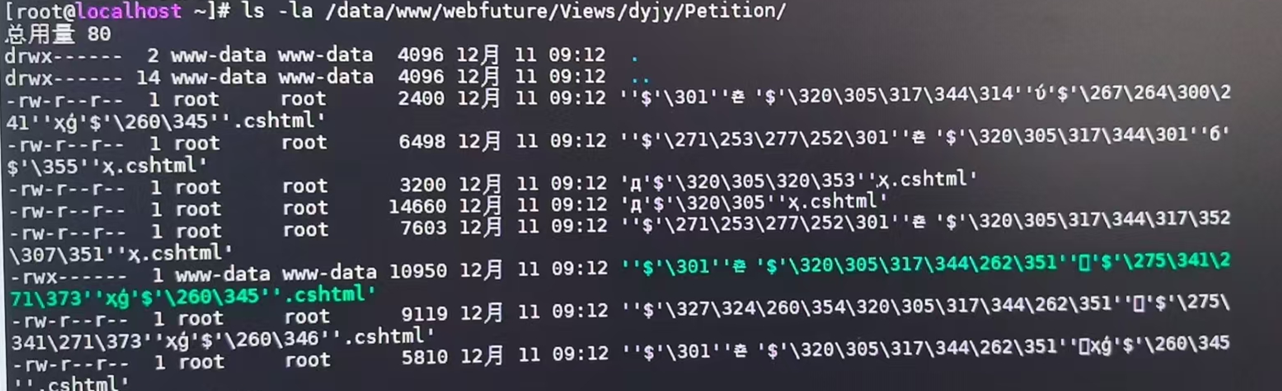
整个网站目录批量测试是否存在乱码文件
以/data/www/webfutre目录为例,将下面保存为例如find.sh,给执行权限后再终端运行:/data/find.sh > /data/find.txt,最终查看 /data/find.txt文件
#!/bin/bash

TARGET_DIR="/data/www/webfuture"

# 确保目录存在
if [ ! -d "$TARGET_DIR" ]; then
    echo "Error: Directory $TARGET_DIR does not exist."
    exit 1
fi

echo "Scanning for invalid UTF-8 filenames under $TARGET_DIR ..."

export LC_ALL=C  # 确保原始字节不被 locale 干扰

find "$TARGET_DIR" -type f -print0 | \
while IFS= read -r -d '' file; do
    # 检查文件名是否为合法 UTF-8
    if ! printf "%s" "$file" | iconv -f UTF-8 -t UTF-8 >/dev/null 2>&1; then
        echo "INVALID UTF-8 FILENAME: $file"
    fi
done
2:使用脚本修复全部文件
#!/usr/bin/env python3
import os
import sys

def safe_print(s):
    """安全打印可能包含 surrogate 的字符串"""
    try:
        print(s)
    except UnicodeEncodeError:
        # 替换 surrogate 为 <?> 再打印
        cleaned = s.encode('utf-8', errors='replace').decode('utf-8', errors='replace')
        print(cleaned)

def fix_gbk_surrogate_filenames(root_dir):
    # 使用 os.walk 从底层开始(先子目录后父目录),避免重命名后路径失效
    for dirpath, dirnames, filenames in os.walk(root_dir, topdown=False):
        # 先处理文件
        for name in filenames:
            if not name.endswith('.cshtml'):
                continue
            try:
                # 尝试正常 encode:如果成功,说明是合法 UTF-8,跳过
                name.encode('utf-8')
                continue
            except UnicodeEncodeError:
                # 包含 surrogate,需要修复
                try:
                    # 提取原始字节(保留 GBK 编码)
                    raw_bytes = name.encode('utf-8', errors='surrogateescape')
                    # 用 GBK 解码得到正确中文
                    fixed_name = raw_bytes.decode('gbk')
                    old_path = os.path.join(dirpath, name)
                    new_path = os.path.join(dirpath, fixed_name)
                    safe_print(f"Fixing file: {old_path} → {new_path}")
                    os.rename(old_path, new_path)
                except (UnicodeDecodeError, OSError) as e:
                    safe_print(f"Failed to fix file: {name} | Error: {e}")

        # 再处理目录(同理)
        for name in dirnames:
            try:
                name.encode('utf-8')
                continue
            except UnicodeEncodeError:
                try:
                    raw_bytes = name.encode('utf-8', errors='surrogateescape')
                    fixed_name = raw_bytes.decode('gbk')
                    old_path = os.path.join(dirpath, name)
                    new_path = os.path.join(dirpath, fixed_name)
                    safe_print(f"Fixing DIR : {old_path} → {new_path}")
                    os.rename(old_path, new_path)
                except (UnicodeDecodeError, OSError) as e:
                    safe_print(f"Failed to fix DIR: {name} | Error: {e}")

if __name__ == "__main__":
    fix_gbk_surrogate_filenames("/data/www/webfuture")
将文本保存为fix_names.py,给执行权限,然后python3 fix_names.py来转换
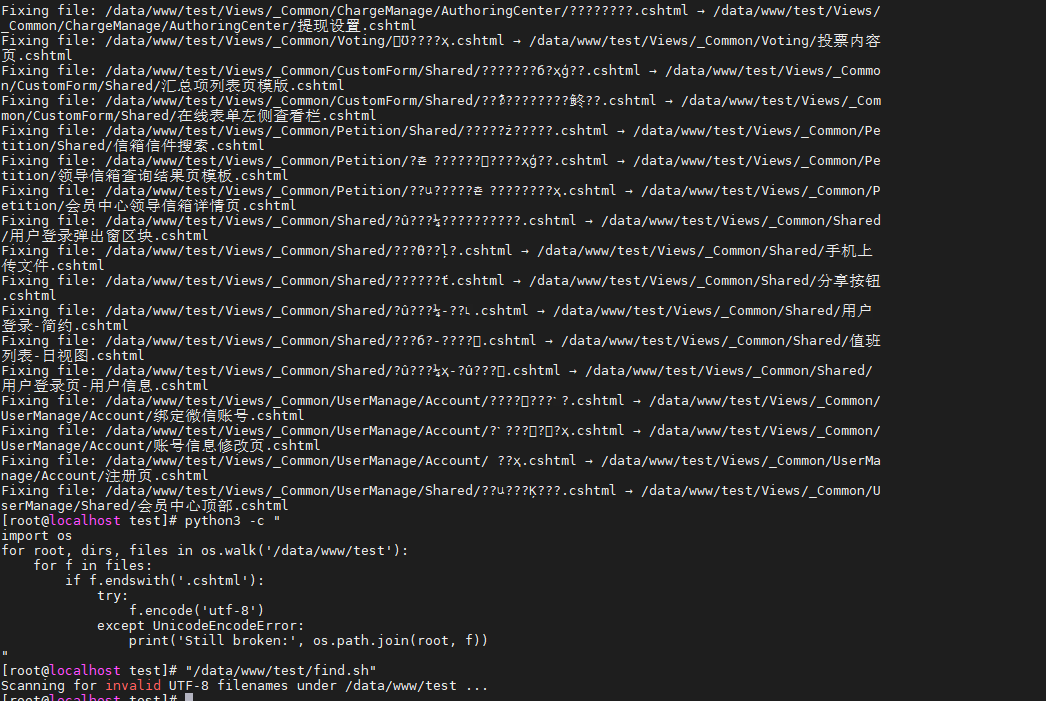
编辑
